Mont Blanc, France
Trip Description
Ideally, well have the team filled and confirmed asap, as flight ticket purchasing along with itinerary confirmation is best done in Feb.
Proposed itinerary:
- Leave YVR June 30 and fly to Geneva, then travel to Chamonix to acclimatize for a day or two
- Take MB Tram to Bellevue stn 1,800m or ideally Le Nid D'Aigle station at 2372m (depending on available tram service)
- An optional route is the Les Trois Monts, which is a technically more challenging and less crowded route than the more popular and somewhat easier Gouter route,
- 2-3 day trip up and down the mountain, positioned earlier in overall trip to allow for delays due to weather or other contingencies
- La Tete Rousse hut & Gouter Hut stays likely; to be determined by team; reservation availability a factor
- Overall, 5-7 days in the Chamonix/French/Swiss/Italian Alps region. Open to a longer trip if the group desires
- Remaining days post-summit can be additional alpinism or more casual touristy fare
- There is ample info online regarding the routes, required equipment and logistics
- Having the appropriate experience, training, conditioning, equipment and funds to complete this goes without saying
- We will be roped in certain sections; hazards include steep snow/ice, rockfall along the Grand Couloir, as well as other climbers
- Pre-trip planning meetings and possible 'rehearsal ' trip will take place in weeks/months before
- Practice trips discussed so far: Baker, Shuksan, Garibaldi
- Please perform your own research thoroughly prior to committing.
The Gouter route is seen as the normal route up Mont Blanc, and is technically one of the easier, so gives relatively inexperienced climbers the best chances of summit success. It is preferable to stay in the higher Gouter hut for the night before, which takes about five hours to reach from the Nid d'Aigle mountain railway station. On the way to the hut you will pass the Tete Rousse hut and then approach the Gouter Grand Couloir, the greatest danger on the ascent. The couloir is about 50 metres wide, and depending on the amount of ice up high, the temperature, and the time of day, some rocks can fall down from time to time. To minimize the risk, we will cross the couloir when the temperatures are cold such (early morning). Once on the far side of the couloir, the next consideration is the rocky ridge leading up to the hut. Although the scrambling is easy, many tired people lose their footing here. The Gouter hut is one of the busiest in the Alps, so getting spaces there is difficult. The next morning, set off early to get the best conditions on your way to the summit. After the long climb to the Dome du Gouter, you quickly reach the Vallot emergency refuge, and after there you can see the final summit ridge.
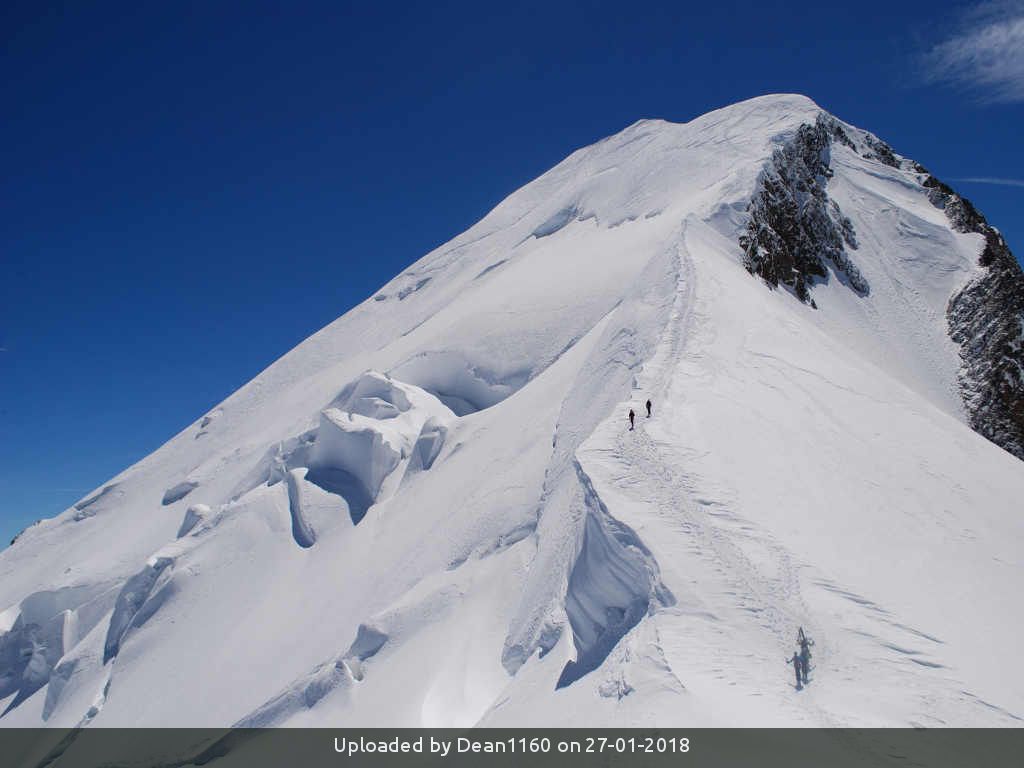
The first consideration are the two domes of the Bosses (Bumps), which are quite broken with crevasses. After the Bosses the ridge narrows and steepens to the summit. The exposure is high, and many turn back before the Tournier Rocks, due to a lack of skill and confidence on ridges. The route is also very exposed to wind throughout, so there are two considerations; winds too high to walk safely, and also exposure. The snow ridge above the Vallot is amazing, and if you are well acclimatized and good on crampons, you will love ascending this crest all the way to the summit.
From the Chamonix website:
Mont-Blanc has a high fatality rate, maybe more than any other mountain in Europe. Being the tallest in western Europe, it represents an attraction for climbers all over the world. Every year there are thousands of amateurs and climbers with little mountaineering experience that tackle the climb, due to the fact that the mountain is not considered to be particularly difficult to climb from a technical point of view.
Trip Photos
Participant List
5 / 6Interested in joining this trip or others like it? Sign in or sign up to join!